A backyard hardscape project is one of the biggest purchases most homeowners make outside a car or a kitchen — and the one where "shop smart" gets misunderstood most. People save on the wrong half, splurge on the other, and book the work in the month it costs most. A patio, walkway, or paver driveway is very budgetable once you stop treating it as one lump sum.
Here's the takeaway up front: split the project into what holds it up and what you look at, save hard on the second, never on the first, and time the build for the off-season. Do those three things and you'll spend less without buying a surface you'll regret.
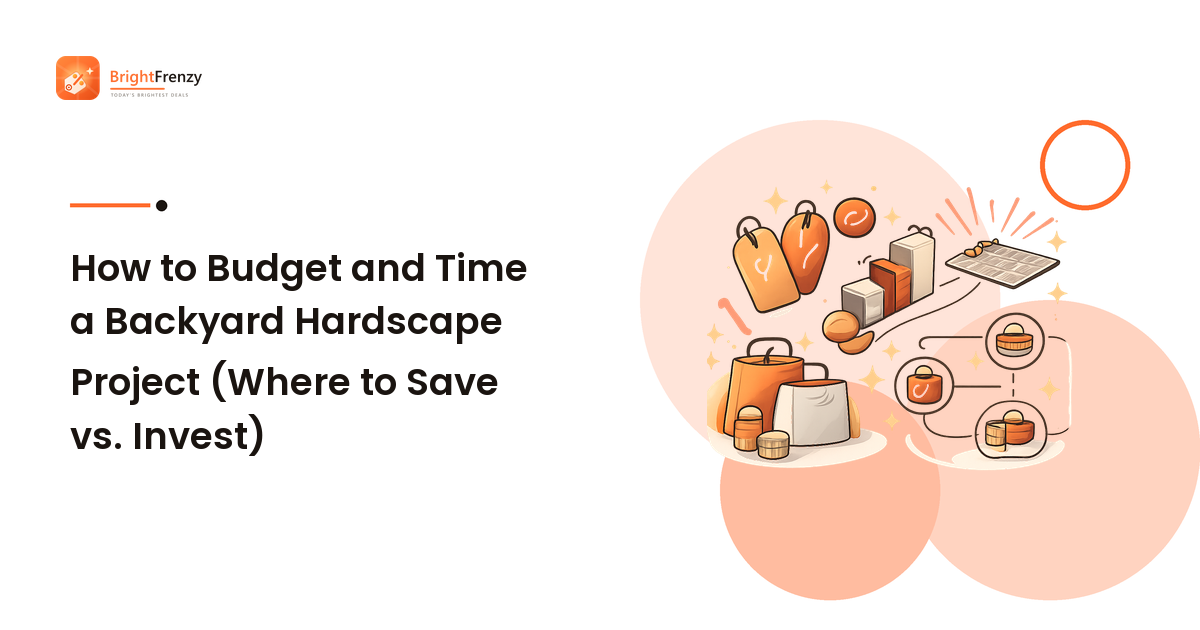
Split the budget: structure vs. finish
Every hardscape quote is really two budgets wearing one number.
The structure is everything under and around the surface: excavation, grading, the compacted base, drainage, edge restraint, and the labor to install it correctly. You never see most of it once the job's done — which is exactly why it's tempting to trim. Don't. It decides whether your patio is flat and draining in ten years or heaving and cracking in three.
The finish is what you look at and choose: the paver style, color, pattern, border, and optional fire pit or seating wall. This is where taste lives, prices swing wildly, and trimming costs you nothing structural. A simpler paver in a running-bond pattern sits on the same base as the premium one in a contrasting herringbone.
Sorting every line item into one of these piles tells you whether cutting its cost is smart or a false economy.
Where to save without regret
Once the split is clear, the savings hide in plain sight — all on the finish side:
- Pattern and layout. A basic laying pattern uses less labor and fewer cuts than an intricate one, and sits on the identical base. The simpler look is often the cleaner one anyway.
- Paver tier, not paver quality. The "premium" lines are mostly about the newest color blend or textured face. A mid-tier paver from the same maker is typically just as durable — you're paying a fashion premium, not a longevity one.
- Phasing the scope. You don't have to build the patio, walkway, fire pit, and seating wall in one invoice. Nail the core surface now, add features later — it spreads the spend and lets you learn the space first.
- Size honestly. An oversized patio is the quietest budget leak there is. Pave the space you'll actually furnish and use, not square footage you'll never stand on.
It's the same discipline behind our guide to finding real deals: know what you're paying for first, and a lower finish number rarely means a worse surface.
Where to invest (cutting here costs double)
Now the other pile — where "saving" is the most expensive move you can make:
- The base and drainage. A thin, under-compacted base, a skipped drain, or a slope that runs toward the house instead of away is the number-one reason hardscapes fail — and the fix isn't a touch-up, it's tearing out the surface to rebuild underneath. You pay for the base twice, plus a new install on top.
- Edge restraint. The unglamorous edging that keeps pavers from spreading outward. Cheap out and the field slowly creeps, joints open, and the surface loosens — a small line item with an outsized job.
- Installation labor. Who lays it, and how carefully, is the biggest factor in whether it lasts. A rock-bottom bid usually means corners cut where you can't see them — thinner base, less compaction, sloppy slope. That's a deferred bill, not a discount.
The pattern is consistent: the invisible, structural half is where money spent stays spent, and money saved comes back with interest. If you're still weighing surfaces, our breakdown of pavers vs. poured and stamped concrete covers how each one ages.
Timing: when a hardscape project is cheapest to build
Timing moves your quote as much as any material choice, and most homeowners book at the wrong moment. Demand for outdoor work peaks in spring and early summer, when everyone decides at once that they want the patio ready for the season — which means busy crews, longer waits, and firmer prices. The quieter stretches, late fall and winter in mild climates, are when many installers have open calendars and more room to sharpen a bid. In the Bay Area's mild winters, hardscape work runs comfortably year-round, so the off-season is a genuine opportunity rather than a weather gamble.
Get your quotes well before you want to break ground, so you're never negotiating against a deadline — and treat any "book this week" pressure like a checkout countdown timer: a nudge, not a real saving.
Getting an honest quote
A good specialist will tell you where to save and where not to — a job that fails comes back on them. If you're in the Bay Area, Pavers and Turf by O'Neill's is a reasonable place to start a quote: they focus specifically on interlocking pavers, hardscape, and artificial turf around Livermore and the wider Bay Area, so you're talking with people who install this daily and know the local clay soils and drainage quirks — not a general contractor pouring a slab as a sideline. Get a couple of other quotes too, and compare them the same way.
FAQ
What part of a hardscape project should I never cut costs on?
The structural half you can't see: the compacted base, drainage, edge restraint, and careful installation labor. A failed base or bad slope means tearing out the surface and rebuilding it — you pay twice. Save on the finish instead.
Where can I safely save on a patio or paver project?
On the finish: a simpler laying pattern, a mid-tier paver instead of the top "premium" line, phasing optional features for later, and sizing the space honestly. These trim the cost without touching durability.
When is the best time of year to book hardscape work?
Off-peak. Spring and early summer are peak demand, when crews are busiest and prices firmest. Late fall and winter tend to have open calendars and room for a better bid — and in mild climates like the Bay Area, work runs year-round, so the off-season is a real saving, not a weather risk.
Ready to plan the spend properly? Invest in the base, skimp on the flourishes, and time the build for the quiet season. If pavers or turf are your pick in the Bay Area, start an off-season conversation with a local specialist like Pavers and Turf by O'Neill's — so the yard you build lasts, at a price the calendar helped you get.